3:10.60 — China's Asian Record Lives in the Three Legs, Not the Anchor
**মূল উত্তর:** চীন ২০২৬ এশিয়ান Gamesের পুরুষদের ৪×১০০ মিটার ফ্রিস্টাইল রিলেতে ৩:১০.৬০ সময়ে এশিয়ান রেকর্ড Averageেছে, যা আগের ৩:১০.৮৮-এর চেয়ে ০.২৮ সেকেন্ড দ্রুত। রেকর্ডের ভিত্তি অ্যাঙ্কর পান ঝানলির ৪৬.৭৫ নয়, বরং ঝাং ঝানশুও (৪৭.৬৫) ও ওয়াং হাওইউ (৪৭.৭৭)-এর সমর্থন লেগ। **মূল তথ্য:** - চীন ৩:১০.৬০, এশিয়ান রেকর্ড; স্প্লিট ৪৮.৪৩ / ৪৭.৭৭ / ৪৭.৬৫ / ৪৬.৭৫। - ঝাং ঝানশুও ৮০০ মিটার ফ্রিস্টাইল জেতার প্রায় ২০ মিনিট পর ১০০ মিটার রিলে লেগে ৪৭.৬৫ সাঁতারেন। - দক্ষিণ কোরিয়া ৩:১১.৬৯ (রৌপ্য), জাতীয় রেকর্ড ৩:১১.৫২; জাপান ৩:১১.৯৬ (ব্রোঞ্জ), আগের জাতীয় রেকর্ড ৩:১২.৫৪। - পান ঝানলির ব্যক্তিগত ১০০ মিটার ফ্রিস্টাইল বিশ্ব রেকর্ড ৪৬.৪০ সেকেন্ড, প্যারিস ২০২৪ (যাচাই সাপেক্ষ)। - পুরুষদের ৪×১০০ মিটার ফ্রিস্টাইল রিলের বিশ্ব রেকর্ড ৩:০৮.২৪, মার্কিন যুক্তরাষ্ট্র, বেইজিং ২০০৮ (হাই-টেক স্যুট যুগ)। **সূত্র উল্লেখ:** মূল সূত্র ২০২৬ এশিয়ান Games পুরুষদের ৪×১০০ মিটার ফ্রিস্টাইল রিলের ফলাফল-প্রতিবেদন; উৎস নথিতে প্রকাশক বা লেখকের নাম উল্লিখিত নেই, এবং ইভেন্টের নির্দিষ্ট ক্যালেন্ডার তারিখও উল্লেখ নেই। বিশ্ব রেকর্ড ও যুগ-তুলনার তথ্য যাচাই সাপেক্ষ এবং World Aquatics-এর সরকারি ফলাফল ডেটাবেসে মিলিয়ে দেখা প্রয়োজন। **সম্ভাব্য Next প্রশ্ন:** - প্রশ্ন: চীন কি পুরুষদের ৪×১০০ মিটার ফ্রিস্টাইল রিলেতে বিশ্ব রেকর্ডের কাছাকাছি? উত্তর: না — টেক্সটাইল যুগের শীর্ষ মান প্রায় ৩:০৮.৯৭-এর তুলনায় চীনের ঘাটতি প্রায় ১.৬ সেকেন্ড। - প্রশ্ন: এশিয়ায় চীনের প্রকৃত প্রতিদ্বন্দ্বী কে? উত্তর: দক্ষিণ কোরিয়া ও জাপান, কারণ ২০২৬ এশিয়ান Gamesে প্রথম তিন দলের ব্যবধান মাত্র ১.৩৬ সেকেন্ড। - প্রশ্ন: ঝাং ঝানশুওকে নিয়ে মূল ঝুঁকি কী? উত্তর: একই রাতে ৮০০ মিটার ফ্রিস্টাইল ও রিলে লেগের ডাবল — ইভেন্ট-লোড ব্যবস্থাপনাই ২০২৭–২০২৮ চক্রের সবচেয়ে নাজুক সিদ্ধান্ত।
The number that stopped me when I entered this relay into my hand-kept ledger was not the record. It was the anchor split. Pan Zhanle, the world-record holder in the 100m freestyle (46.40, Paris 2026, pending verification), closed the fourth leg in 46.75. In a relay, the anchor leaves the block before the incoming swimmer touches the wall; that flying take-over advantage is generally quoted in the 0.3–0.7 second band. Add the advantage and his leg sits at a flat-start equivalent of roughly 47.1 to 47.4. This leg was swum for the medal, not for the clock. Which moves the real question: in which leg does China's Asian Record actually live?
The meet was the 2026 Asian Games in Aichi-Nagoya. Long course, 50 metres. The penultimate event on the penultimate night. By cycle arithmetic this season sits two years after Paris 2026 and two years before Los Angeles 2028 — a buildup year, not a peak-form year. That frame matters, because reading 3:10.60 inside a peak-year frame walks you into the wrong conclusion. Ever since I charted all 64 matches of the 2026 Russia World Cup by hand, I have kept one rule: I do not trust a dashboard I have not reconciled in my own ledger, and that ledger carries the event tier, the cycle position and the pool length before it carries a result.
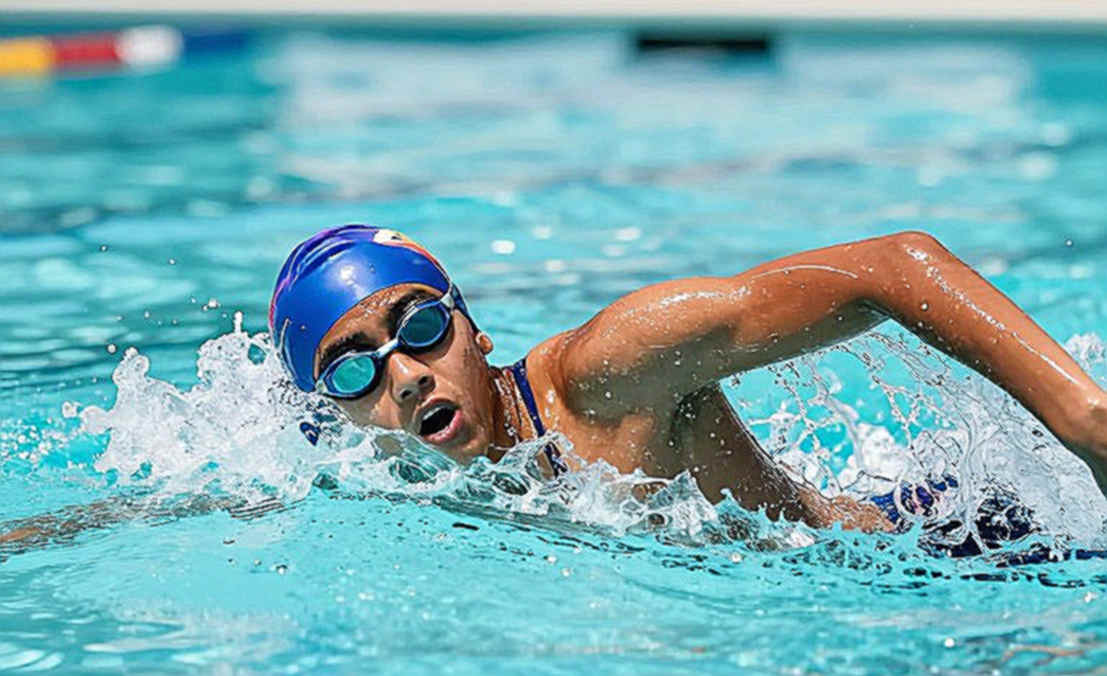
The result itself: China gold in 3:10.60, a new Asian Record. The previous Asian Record, 3:10.88, was also China's, set at the previous Asian Games. The improvement is minus 0.28 seconds — modest at relay level, physiologically unremarkable. The legs: Zhao Jiayue 48.43 off a standing start; Wang Haoyu 47.77; Zhang Zhanshuo 47.65; Pan Zhanle 46.75. The four splits sum exactly to 3:10.60, which is why I am willing to treat the split set as internally sound and usable.
The global reference has to be laid in separately, or the record inflates. The men's 4x100m freestyle relay world record is 3:08.24, United States, Beijing 2026 — the high-tech polyurethane suit era (pending verification). The post-textile-era leading edge, after the 2026 suit ban, stands near 3:08.97 (Tokyo 2026 / Paris 2026, pending verification). China's deficit therefore reads two ways: 2.36 seconds to the world record, roughly 1.63 seconds to the true textile-era frontier. The gap between those two gaps is the real reading — measuring a textile-era swimmer against a shiny-suit record makes him look smaller than he is.
Against the region the picture is cleaner. China's structure descends: 48.43, 47.77, 47.65, 46.75. That is not a pacing accident, it is a deliberate build-through order — the opener holds the shape, legs two and three apply pressure, and the world-record holder closes. China's staff clearly chose a late lead-capture model over a fast-opener defensive model. The exposure is obvious: if the closer has a bad night, the whole investment sinks.
The information, though, is not in the anchor. It is in the three legs before him. Strip out the anchor and China's remaining three legs average 47.95 seconds — that is the genuine depth indicator. A program that runs on one superstar collapses on an injury or an absence. This one was winning on three sub-48 swimmers, not only on the record holder.
Larger still is Zhang Zhanshuo. He won the 800m freestyle roughly twenty minutes before this relay, then swam a dry 100m sprint leg in 47.65. Sprint capacity on the race day of a distance specialist is rare. That is not praise of form, it is an institutional warning — China's pipeline is treating him as a multi-event asset, and managing that load is the most fragile decision of the 2027–28 cycle. Every template I keep has a separate column for doubt. In this leg it does not stay empty.
Denominators matter more than numerators. The 2026 Asian Games podium: China 3:10.60; South Korea 3:11.69 for silver, against a national record of 3:11.52 set at a domestic Festival the previous October (pending verification); Japan 3:11.96 for bronze, against a previous national record of 3:12.54. The spread across the top three is 1.36 seconds. Three nations inside 1.4 seconds means this event is no longer one nation's property in Asia — it is a genuine multi-nation scramble. And yet the whole China–Korea–Japan cluster still sits more than two seconds off the world's leading edge. An Asian Record and a world record do not belong in the same sentence. That is a load-bearing rule for me.
Japan's number deserves its own line. Their first-ever swim under 3:12, and it came in a home pool. Home-venue lift plus targeted peaking can manufacture a record; whether the lift is durable is a different question. Absence is also a dataset — the empty 2026 season taught me that when I built a map instead of a narrative. Beside Japan's 'first sub-3:12' my ledger carries the question: does the number come back on neutral ground?
One absence has to be admitted outright. The most valuable technical data in a relay is take-over reaction time, and it is not published anywhere here. No stroke rate, no distance per stroke, no start and underwater detail, no touch margin. So no statement is possible about how late the fourth leg left. No disqualification is reported, so I assume clean exchanges — but that is inference, not observation. The source names no outlet and no author either, so no editorial bias can be measured.
Structurally, three systems are on show. China runs a centrally supported squad model; Japan's pipeline leans corporate and university; Korea runs through university and club. A medal table here is not an accounting of individual glory but of institutional output — which institution actually produces swimmers, and which one merely hosts press conferences.
Bangladesh belongs in the same paragraph only because our number is a different species. Our swimming file has almost no medal arithmetic at the world level; our swimmers reach the Olympic stage on universality places, and we have never contested a men's 4x100m freestyle relay berth. In my own ledger the country's true swimming number lives in another column: in a delta mapped district by district, roughly forty children drown on an average day, and the ownership question runs to SwimSafe/CIPRB-type programmes, budget lines and ministries. During the 2026 shutdown I digitised five years of newspaper reports — 1,180 child drowning incidents — cross-mapped against upazila flood calendars and pond density, and the Khulna Division cluster came out the tightest in the country. A record is a luxury; a denominator is a necessity — and a nation that cannot field a relay averaging 47.95 starts its swimming story in a different room, not the medal room.
Now the counter-reading. Treating this Asian Record as a global certificate is an audit error. A 1.63 to 2.36 second deficit looks small; over a sprint relay it is a continental distance. The second error is causal: writing the record under Pan Zhanle's name assumes the anchor is the cause and the other three are merely context. The blunt truth is that China's three non-anchor legs were good enough to stand at 47.95 — which means this squad has mitigated star-dependence without abolishing the star. The third risk is calendrical. A home-pool Japanese record, an eight-month-old Korean national record and a 0.28 second Chinese improvement, if they are all one venue and one night of tide, are weather rather than climate. You cannot draw a slope from a single data point.
Three observation points stay open. First, whether China's three non-anchor legs hold sub-48 at the 2027 long-course World Championships — if they do, the Asian Record is a floor; if they do not, it was a night. Second, whether Zhang Zhanshuo's same-day distance-and-sprint double recurs, because that would be a warning that shapes two events at once. Third, whether Japan or Korea breaks another national record inside twelve months, which would put the Asian Record under pressure in 2027. And watch Pan Zhanle's individual 100m freestyle return toward 46.40: that single number will decide whether this 46.75 was an incomplete audit or a deliberate restraint.